

Spin and launch angle are two of the biggest factors in driver and fairway wood performance. They influence how high the ball flies, how long it stays in the air, how much it carries, and how much control a player has from shot to shot.
That is why wood shafts, including Forta, are available in different flex and performance profiles. There is no single driver shaft that works for every golfer. The right shaft depends on swing speed, tempo, delivery, feel preference, and the club head it is paired with.
The goal is to find the right balance of speed, launch, spin, and dispersion.
What Is Spin?
Spin refers to how much the golf ball rotates after impact.
With woods, spin has a major impact on carry distance, trajectory, and control. The right amount of spin helps the ball stay in the air and carry farther. Too much spin can cause the ball to climb too high, lose distance, reduce rollout, and make misses more noticeable.
Spin is not created by the shaft alone. It is influenced by the full club build and the golfer’s delivery, including clubhead speed, loft, angle of attack, impact location, face angle, and shaft profile.
A golf shaft can influence spin by affecting how the club is delivered at impact.
Why Spin Matters
For some golfers, a little more spin can help create better carry. It can help the ball launch, stay in the air, and travel farther. For others, too much spin can become a problem. It can cause the ball to balloon, climb too high, and fall out of the air with less rollout.
That is why spin control matters. The goal is not always to create the lowest spin possible. The goal is to create the right amount of spin for the player.
What Is Launch Angle?
Launch angle is the angle at which the ball leaves the clubface.
A higher launch angle can help golfers get the ball in the air more easily and create more carry distance. A lower launch angle can create a more penetrating flight and may help players control trajectory and reduce ballooning.
Like spin, launch angle is influenced by more than just the shaft. The driver head, loft setting, impact location, ball position, swing speed, and angle of attack all play a role.
The shaft can influence launch by affecting how the club loads, unloads, and presents the clubhead at impact.
Higher Launch Is Not Always Better
A higher launch can be helpful, but only to a point. If the ball launches too high, especially with too much spin, it can cost distance and control. The shot may look like it gets up quickly, but it may not carry efficiently or roll out once it lands.
On the other hand, a launch that is too low may not give the ball enough time in the air, especially for players who need help creating height and carry.
Finding the Right Ball Flight
The goal is not always to launch it higher. It is not always to spin it less. The goal is to create a ball flight that performs.
For some golfers, that means more height and carry. For others, it means a flatter, more penetrating flight. For many players, it is somewhere in between.
The right shaft should help the player produce launch and spin numbers that work together, not fight each other. When launch and spin are properly matched, the result is better carry, better control, and more consistent distance.
That is why fitting matters. The right driver shaft profile is not based on ego, age, or a flex label. It is based on how the golfer delivers the club and what ball flight gives them the best performance.
Flex Is Only Part of the Story
Shaft flex matters, but it is not the whole story.
Two driver shafts with the same flex rating can perform very differently. Weight, torque, bend profile, tip stiffness, balance point, and overall construction can all influence how a shaft feels and performs.
The better question is not just, “What flex do I need?”
The better question is, “What shaft profile helps me deliver the club more consistently?”
Why Fitting Matters
The golf shaft matters, but it does not work by itself. The driver head, loft, face design, ball, impact location, and player delivery all influence launch, spin, speed, and dispersion.
That is why the best way to find the right shaft is through a proper fitting. A fitter can evaluate swing speed, tempo, delivery, launch, spin, ball speed, carry distance, and dispersion. From there, they can help identify which shaft and head combination gives the golfer the best overall performance.
Forta wood shafts are designed to give golfers options based on how they swing, not just what flex label they think they need.
If you are not sure which shaft profile is right for your game, a fitting is the best place to start.
Golfers have been playing with steel putter shafts since time immemorial. Yet there was a time when driver shafts were almost universally made of steel, yet today, all of the top-performing, industry-leading driver shafts are all composite graphite shafts.
There are good reasons for this, and the same conditions are starting to affect the corner of the market that concerns putter shafts. While it is true that many putter shafts are still steel, there is an increasing number of adherents that choose graphite.
But why? Let’s take a closer look.
To understand why some golfers prefer to outfit their putters with graphite shafts, we must first understand what makes steel putter shafts good, as well as not so goo
Among other things, steel is heavy and comparatively cheap. But, price notwithstanding, it’s the stiffness and consistency of steel that has kept steel putter shafts prevalent.
There are some intransigent golfers who may putt with steel shafts simply because “that’s what we do”, but to be fair to them, steel has some serious advantages when it comes to consistency.
Steel is very stiff and you can expect very reliable, replicable results and accuracy from a steel putter shaft. The high-stiff and low torque don’t make steel forgiving, but they do make it very, very accurate with good form and accurate contact. A square putter head and a consistent swing stroke with a steel shaft will produce very accurate putts.
With that said, it’s not all sunshine and rainbows with steel putter shafts. For all their stiffness and consistency, they are heavy in the hand, and worse, even though steel is stiff, it doesn’t have a soft feel and it certainly doesn’t offer very good sensitivity.
So, what is it that draws golfers to the allure of graphite putter shafts?
A lot of what attracts golfers to graphite putter shafts is that they can mimic, and in some cases outdo the performance of steel, while offering far better balance, feel and sensitivity.
As stated, steel is heavy. While to some golfers the heft of steel is a reassuring testament to its stability, to other golfers, it just feels clunky. Advanced graphite putters can be made lighter. For instance, our Stability ONE only tips the scales at 115 grams. Compare this to the True Temper Premium Stepless, which weighs between 120 and 127 grams, almost 10% heavier.
With graphite, it’s also not just about the weight itself, but how the putter shaft is weighted. Because the lay and density of the fibers in a graphite shaft can be manipulated, swing weighting and balance can be customized in ways that steel does not allow.
Composite putter shafts can also be designed and developed to rival the stiffness of steel, ensuring that the putter squares on contact with the ball, upholding a high degree of accuracy. In addition to being super-stiff, premium graphite putter shafts can exhibit 1° or less of torque, delivering exceptional consistency, just like, or even better than steel.
In cases in which the torsional stiffness of graphite putter shafts exceeds that of steel, it helps prevent the putter from deflecting on off-center shots. Even when the effect here is infinitesimal, it can have a significant impact on the accuracy of the putt.
Golfers that have played with graphite putter shafts have remarked that it produces the same consistency and performance, with respect to stiffness and torque, as steel, putting them on equal footing, if not giving graphite the edge.
But with respect to sensitivity, that’s where the gulf between them grows. Steel often feels dead in the hand and does not produce either the sensitivity or the feedback so crucial to golfers, which can be used to educate them on where their putt went wrong, in the case of a wide putt.
Graphite is much more sensitive than steel and transmits the vibrations incurred during contact through the shaft and grip into the golfer’s hands. Graphite shafts also deliver a softer feel that many golfers find more pleasant than steel.
Specifically, this soft feel preserves the sensitivity of graphite putter shafts without producing the harsh vibrations that sometimes occur with steel on off-center strikes, preventing those vibrations from interfering with the feedback that the shaft offers.
For most golfers, the driver shaft is the single most impactful equipment variable they never think twice about. Stock shafts are engineered to be "good enough" for the broadest possible audience, which means they're rarely optimized for anyone in particular.
If you've ever striped a drive down the middle only to watch the next one balloon into the stratosphere for no apparent reason, the shaft, not your swing, may be the weak link. That's exactly the problem Breakthrough Golf Technology set out to solve with the Forta.
The Forta is a lightweight wood shaft built around a straightforward premise: you should be able to swing faster without paying for that speed in accuracy or ballooning spin. It uses ultralight Toray carbon fiber — the same aerospace-grade material found in high-end racing and aviation components — to keep total weight remarkably low.
The lightest flex (F2) comes in at just 46 grams, and even the stiffest option (F5) weighs only 58 grams. That's meaningfully lighter than many stock driver shafts, which tend to sit in the 60-to-70-gram range.
Less mass in the shaft means more clubhead speed for the same effort, and more clubhead speed means more distance — but only if the shaft can keep the clubface stable through impact.
This is where a lot of budget lightweight shafts fall apart. They trade grams for consistency, giving you an occasional long bomb mixed in with wild misses. The Forta addresses this with what BGT calls advanced torque control, keeping the face steady even when you're swinging at your hardest. Their testing data backs this up: the Forta finished an average of 22 percent closer to the target line than leading lightweight competitors in dispersion testing.
Two key innovations set the Forta apart from other lightweight offerings. The first is reduced face oscillation. When a clubhead strikes the ball, the face doesn't just compress and release, it vibrates. Those micro-oscillations affect launch angle, spin rate, and directional consistency from shot to shot.
Toray carbon fiber's exceptional strength-to-weight ratio allows BGT to build a shaft stiff enough to dampen those vibrations without adding bulk.
The second is our proprietary Speedflite NRG technology. In practical terms, this minimizes the lag between the shaft's energy release and the moment of impact, allowing the ball to launch more explosively off the face. Think of it as reducing energy lost in translation: more of the power you generate in the downswing actually makes it to the ball instead of dissipating in shaft flex and recovery.
The golf industry spends billions marketing clubheads — adjustable weights, aerodynamic crowns, AI-designed faces — but the shaft is the engine that delivers all of that engineering to the ball.
A poorly matched shaft can negate every advantage a modern driver head offers. Too heavy and you lose speed. Too whippy and you lose control. Too stiff and you lose launch.
A high-quality aftermarket shaft like the Forta is custom-tuned across multiple performance dimensions simultaneously. The spec table tells the story: four flex options spanning head speeds from 75 mph to 105-plus mph, each with calibrated torque, launch, and spin characteristics. The F2 and F3 offer high launch and elevated spin for players who need help getting the ball airborne and carrying. The F4 and F5 progressively flatten the trajectory and reduce spin for faster swingers who already generate plenty of height and need to keep the ball from ballooning.
This kind of granular optimization is something stock shafts almost never provide. You get "regular" or "stiff" and hope for the best. With the Forta, the launch and spin profile are dialed in to your speed range, which means tighter carry windows and more predictable distances, the kind of consistency that actually shaves strokes.
The Forta isn't just for tour players or low handicappers. In fact, moderate-speed players may see the most dramatic improvement. If your driver head speed sits in the 75-to-95 mph range, you're leaving significant distance on the table with a heavier shaft. Dropping ten or fifteen grams can add measurable clubhead speed, and the Forta's spin management ensures those extra miles per hour translate into carry rather than side spin.
For faster swingers, the benefit is more about control than raw distance. The F5 flex at 58 grams and 4.0 degrees of torque provides the stability that aggressive swings demand, keeping dispersion tight even when you're going after it.
There's a reason the shaft is called the engine of the golf club. You can bolt the most advanced clubhead in the world onto a mediocre shaft and get mediocre results. The BGT Forta represents a new generation of lightweight wood shafts that refuse to compromise, delivering genuine speed gains without the accuracy penalty that has historically come with going lighter.
If you're serious about finding distance you didn't know you had while keeping your drives in the fairway, the Forta deserves a serious look.
Choosing a putter is one of the most personal decisions in golf. Unlike drivers or irons, where distance and forgiveness often dominate the conversation, a putter lives almost entirely in the realm of feel, confidence, and consistency.
Among the many design variations, the debate most golfers eventually face is mallet putter vs blade putter. Each has a distinct history, design philosophy, and performance profile, and understanding these differences can meaningfully improve your putting.
This article breaks down how mallet and blade putters differ, who each style is best suited for, and how to choose and use them effectively.
At the simplest level, the difference between mallet and blade putters comes down to head shape and weight distribution.
A blade putter has a narrow, traditional shape, typically heel-toe weighted, with a compact profile. It looks clean and minimal at address, often with a single alignment line or none at all.
A mallet putter has a larger head, often extending back from the face. Its size allows engineers to move weight farther from the face and center, increasing stability and forgiveness.
This structural difference affects everything from alignment to stroke mechanics to how mistakes are punished or forgiven.
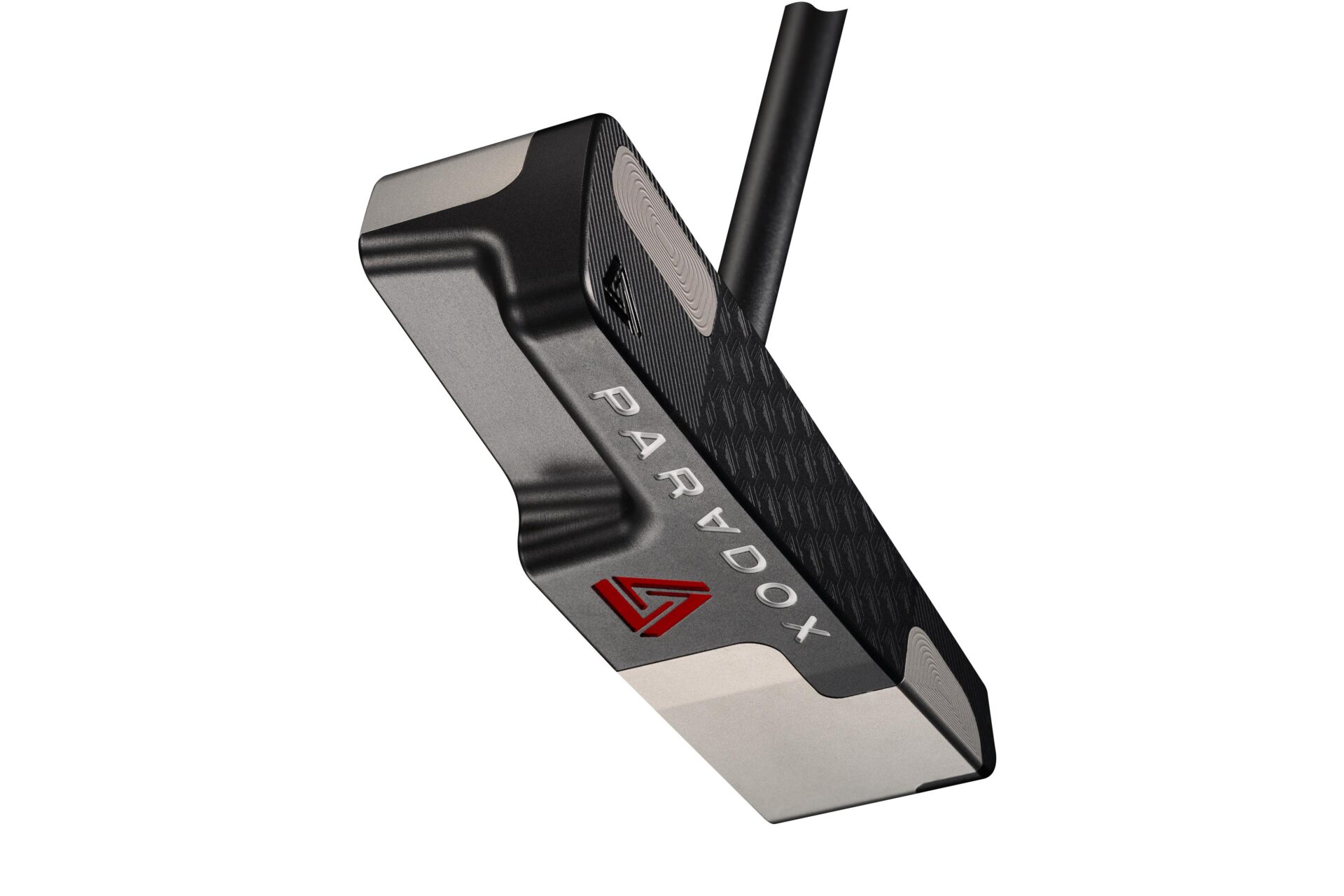
Blade putters are the classic choice, rooted in the early history of golf. Many golfers are drawn to them for their simplicity and responsiveness.
Blade putters excel in feedback and touch. Because the head is smaller and less forgiving, you feel exactly where the ball contacts the face. For skilled putters, this feedback is invaluable, it allows subtle adjustments to distance control and face angle.
They also tend to suit players who prefer a strong sense of control. The head feels lighter and more maneuverable, which many golfers associate with finesse rather than correction.
Blade putters are generally better for golfers with an arc-style putting stroke. Since most blade designs have more toe hang, they naturally open and close during the stroke, matching the natural arc created by many players.
If your stroke feels more like a gentle inside-to-square-to-inside motion, a blade putter often feels intuitive rather than forced.
Blade putters shine on:
They are also visually appealing to players who dislike bulky designs or excessive alignment aids.
The downside of a blade putter can be consistency on mishits. Off-center strikes lose speed and direction more noticeably than with a mallet. For golfers who struggle with consistent contact or alignment, blades can expose weaknesses rather than hide them.
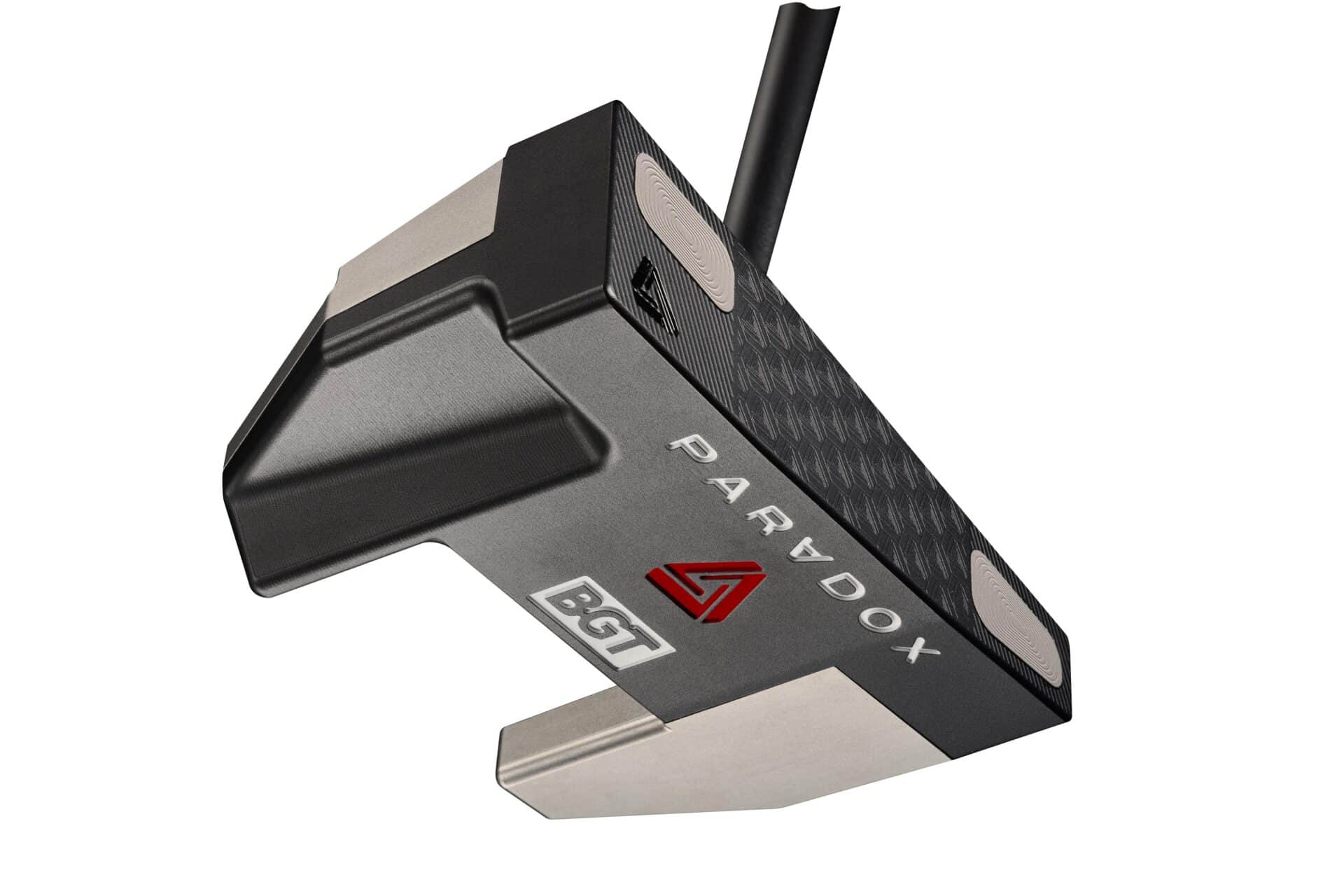
Mallet putters are the product of modern design philosophy. Their primary goal is to make putting more forgiving and repeatable.
The defining advantage of a mallet putter is forgiveness. The larger head allows weight to be pushed to the perimeter, increasing resistance to twisting on off-center hits. This means the ball rolls more consistently even when contact isn’t perfect.
Many golfers also find mallets easier to aim. The head shape often includes bold alignment lines, contrasting colors, or geometric cues that frame the ball clearly at address.
Mallet putters are often ideal for golfers with a straight-back, straight-through stroke. Many designs are face-balanced, meaning the face points upward when balanced, encouraging minimal rotation during the stroke.
If you feel like you “push” or “pull” putts with a blade, a mallet may help quiet your hands and stabilize the face.
Mallet putters excel at:
They are especially helpful for players who struggle with alignment or tempo, as the head design promotes smoother motion.
Some golfers find mallet putters lack feel. The larger head and increased forgiveness can mute feedback, making it harder to fine-tune distance on very fast greens.
Others simply dislike the look. Confidence matters immensely in putting, and if a mallet looks awkward to you, its benefits may be offset by hesitation or discomfort.
Rather than focusing on handicap alone, the best way to choose between a mallet and blade putter is to examine your tendencies.
If you often miss putts because of:
A mallet putter can reduce these errors and improve overall consistency.
If you miss putts because of:
A blade putter may restore feel and simplify your stroke.
Your typical playing conditions should influence your choice.
On fast greens, blade putters often feel superior because they allow delicate touch and easy speed modulation. Many experienced golfers switch to blades for tournament conditions where greens are firm and quick.
On slower or inconsistent greens, mallet putters shine. Their stability helps maintain roll even when grass or moisture interferes with clean contact.
Some golfers even rotate between styles depending on season and course conditions.
If you play a blade putter, success depends on discipline and consistency.
Focus on:
Blades reward a repeatable stroke. Avoid trying to “guide” the ball; trust the face and let your stroke flow.
With a mallet putter, the key is letting the design do its job.
Focus on:
Mallets work best when you avoid excessive wrist action and allow the head’s inertia to promote consistency.
Perhaps the most overlooked aspect of putter choice is confidence. Putting is as mental as it is mechanical. The putter you trust is often the one you perform best with, even if another model looks better on paper.
Blade putters often appeal to golfers who see themselves as “feel players.” Mallet putters often appeal to golfers who value structure and repeatability. Neither mindset is better, what matters is which one aligns with how you approach the game.
The mallet vs blade putter debate has no universal winner. Blade putters offer unmatched feel, precision, and tradition, while mallet putters deliver forgiveness, stability, and alignment assistance. Both can produce elite results when paired with the right stroke and mindset.
The smartest approach is to evaluate how you putt, not how you want to putt. Choose the style that complements your natural motion, your typical greens, and—most importantly—your confidence standing over the ball.
In putting, belief and comfort often matter more than design alone.
Most golfers think of putting as a simple mechanical task: keep the head still, swing straight back and through, and hope the ball rolls true. Yet every seasoned player eventually discovers a truth that separates average putters from great ones: putting is a collection of micro-skills, sensory adjustments, and mental frameworks that work together to create mastery.
Below are some of the often overlooked aspects of putting that golfers rarely talk about, yet rely on instinctively when they perform at their best. These are the “putting secrets” that, when understood and practiced, dramatically improve performance on the greens.
Most instruction focuses on “reading the break,” but much less attention is given to reading the speed of a green, its velocity.
Green velocity refers not just to how fast a ball rolls but how quickly the surface steals or preserves energy from your stroke. The secret is that velocity is not constant across a green. It shifts based on:
Expert putters don’t just eyeball speed, they feel it by observing friction cues: how the green reflects light, how footprints hold shape, how water beads or disappears, how the ball reacted on earlier holes.
Most players aim where they expect the ball to start. Great players aim where the energy of the stroke will send the ball.
A ball starts on a line, but it finishes on a path dictated by:
Putting secret: Aim your putts based on where you expect the ball to die, not where you expect it to start.
If you understand the final three to five feet of the roll—how the ball behaves as it loses momentum—you will stop under-reading breaks. Most amateur misses come from ignoring the final quarter of the putt, where the break is the strongest.
Golfers are told: Keep your head down. The secret? It’s not your head that matters, it’s the triangle formed by your shoulders and arms.
If your head stays still but your triangle collapses, the face will wobble, the stroke path will arc inconsistently, and you’ll pull or push even short putts.
The quiet triangle method transforms your stroke:
A quiet triangle produces consistency without being overly forceful.
The tempo of elite putters is shockingly consistent. The surprising secret: almost all great strokes, regardless of length, fall within a one-second rhythm.
Backstroke: ~0.6 seconds
Forward stroke: ~0.4 seconds
The ratios vary slightly, but the tempo pattern remains stable.
Why this matters:
Instead of obsessing over perfect mechanics, practice the feel of a single tempo applied universally. A metronome is useful, but counting “one-and” silently works just as well.
A putter face that is even one degree open or closed causes significant misses at longer distances. Here’s a subtle trick used by top players:
Use peripheral vision—not direct sight—to confirm face alignment.
When you stare directly at the putter face, your eyes distort the perception due to angle and depth cues. Looking slightly ahead of the ball allows your awareness to sense whether something “feels off” without hyper-focusing on the metal.
Elite putters do not just read a line, they create a repeatable process for committing to it:
The secret: always set the putter before your stance.
Most amateurs do the reverse, causing constant micro-adjustments and misalignment.
A consistent start-line routine becomes a self-correcting habit under pressure.
Great putters divide practice with intention:
Short putts (3–5 feet) build:
Long putts (25–40 feet) build:
Mid-range putts happen mostly by accident—you straighten your line with short-putt mechanics and perfect your distance with long-putt feel.
Most golfers only picture the line. Elite putters imagine:
This sensory visualization creates smoother, more confident strokes. Your subconscious executes the putt more effectively when the brain is primed with multisensory cues.
Putting pressure comes from uncertainty, not difficulty. To eliminate it, create a routine that never changes.
Your routine should include:
The secret: Move into the stroke within two seconds of your final look.
Any longer and your brain begins adding doubt, tension, or over-analysis.
Putting looks simple, but it requires a delicate combination of physics, physiology, and psychology. The best putters don’t obsess over perfect mechanics, they control tempo, alignment, and feel. And they don’t rely on hope, they rely on rituals that hold up under pressure.The secrets above are the tools elite golfers use intuitively. Of course, it helps to start with a strong foundation and that means having a high-quality golf putter that is designed to perform at the highest levels. For that, we recommend Paradox. A swing-balanced, zero-torque putter that will help you master the game.
Many golfers focus mostly on clubheads (loft, face design, materials) and may under appreciate just how much the shaft influences feel, ball flight, forgiveness, consistency, and overall performance.
The golf shaft is the engine of the club: it mediates the forces between your hands and the head, and subtle changes in stiffness, torque, weight, and bending behavior can yield meaningful differences in shot dispersion, launch angle, spin, and feel.
We believe that optimal shaft choice is about matching your swing characteristics to a shaft whose design enhances stability, consistency, and control, not simply “adding distance.”
In this article we’ll walk you step-by-step through the factors to evaluate when choosing a shaft, how to interpret trade-offs, and where our high-performance golf shafts can deliver real advantages.
The purpose of the golf shaft is to transfer the energy from your swing to the clubhead with precision and consistency.
In full-swing clubs, that means optimizing flex, weight, and torque for distance and control. In putters, the shaft’s function is more subtle: it stabilizes the head through the stroke, resists twisting, and provides a consistent feel at impact. Even a fraction of instability in your putting stroke can send a putt offline or affect speed control, so a high-performing putter shaft is essential.
Putting is all about precision and confidence. Every small movement, vibration, and flex can influence the roll of the ball. Standard steel putter shafts have long been the industry norm, but as putting technology has evolved, players and engineers have recognized that these shafts often allow too much flex or torque during the stroke. This micro-instability can lead to inconsistency in face angle and distance control, especially under pressure.
A high-quality putter shaft minimizes these issues by increasing stability and consistency through impact. It’s designed to deliver a truer roll and a more repeatable stroke—something that’s critical for both professionals and amateurs aiming to improve their putting performance.
Here at Breakthrough Golf Technology, we’ve been at the forefront of the shaft evolution, particularly with our Stability line of putter shafts. Our approach is grounded in the belief that the weakest link in most putters is the traditional steel shaft. To fix this, we’ve engineered a multi-material construction that enhances stiffness and reduces torque while maintaining a familiar feel.
Where a standard steel shaft may flex or oscillate slightly during your stroke, a Stability shaft maintains its shape and transfers energy more efficiently. Players immediately notice improved feel and confidence, the putter simply behaves the same every time.
The most important characteristic of a putter shaft is how stable it feels through the stroke. A shaft with reduced torque and higher stiffness keeps the face square longer, especially on mishits. This translates to a more consistent roll pattern and fewer putts pushed or pulled.
Shaft weight affects both tempo and feel. Lightweight carbon shafts allow for smoother acceleration through the stroke, while slightly heavier options can help stabilize shaky hands or fast tempos. Balance is also key; the shaft should maintain the original head weight feel or improve it depending on your stroke type.
The correct shaft length ensures proper posture and eye alignment over the ball. Most putters range between 33 and 35 inches, but custom fitting can optimize your stroke path and comfort. A professional fitting can determine whether a counterbalanced or traditional setup best suits your stroke.
While flex is more critical in full-swing clubs, the feel of a putter shaft remains deeply personal. Some players prefer a firmer response; others like a softer, more dampened sensation.
Traditional putter shafts are made of steel. Advanced models like our Stability Carbon Pro use a hybrid design that increases stability without sacrificing feedback, giving players the best of both worlds, modern performance with a classic putting feel.
If your putter feels inconsistent, if you struggle with distance control, or if your putts tend to veer slightly off line even with a square stroke, it might not be your mechanics, it might be your shaft.
Many golfers spend thousands on fitting for irons and drivers but neglect the single most used club in their bag. Upgrading to a high-performance shaft can often yield more noticeable improvement than any other single piece of equipment.
Picking the right golf shaft isn’t just about swing speed or launch angles, it’s about feel, feedback, and consistency. For putters, the right shaft can be the hidden key to unlocking a steadier, more confident stroke.
Our Stability line, especially the Stability Carbon Pro, represents a leap forward in how modern golfers approach putting. By minimizing torque, enhancing feel, and improving roll quality, it provides a tangible advantage that every golfer, from tour professionals to weekend players, can feel immediately.


