

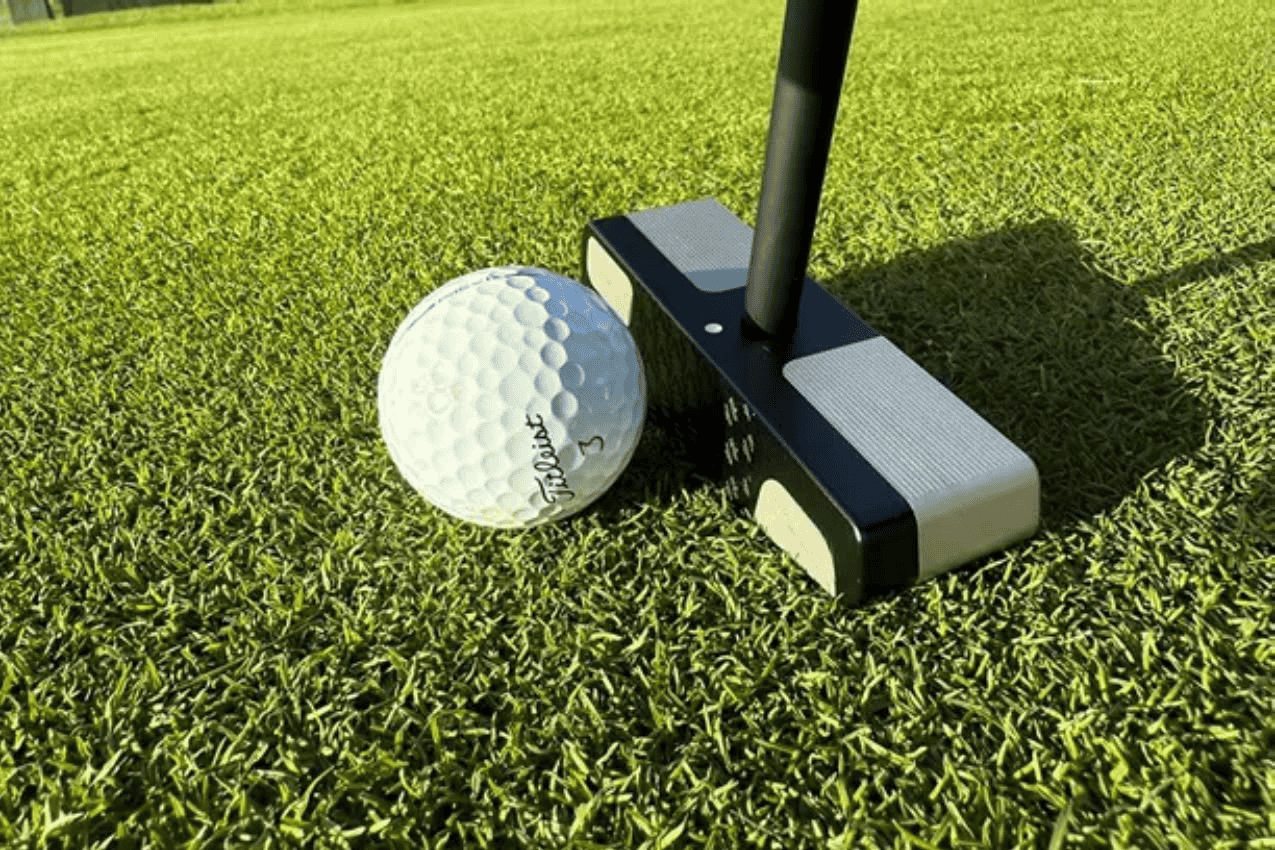
Blade putters offer a clean, compact, traditional aesthetic and are preferred by some golfers, especially those with a slight arc to their stroke, since blade putters tend to have a bit of toe hang that helps the putter face to close at the moment of impact.
But, at the same time, blade putters may not be for everyone, so we rounded up some of the more common questions from the web to answer them here. See if your question is answered here and if not get in touch with us.
A blade putter is a putter with a compact, thin head and a slim, narrow profile. Most traditional putters have a blade profile.
Blade putters tend to be better for players that have an arcing stroke, one that opens and closes slightly through the stroke. The toe hang of most blade putters naturally allows the putter to open with the stroke and close at the critical moment of impact. Some players also argue that blade putters offer better touch and more sensitive feedback as well.
Anyone who appreciates the classic aesthetic of traditional putters can appreciate a blade putter, but really, they usually perform best in the hands of golfers that have a slight arc to their stroke. Players with a straighter, more front-to-back stroke gravitate towards mallet putters.
There are still pros that play with blade putters (such as Harry Hall, Tiger Woods, and Hideki Matsuyama), but many are increasingly preferring the stability and performance of modern mallet putters.
While blade putters can offer excellent feedback and tend to close naturally for players who have an arcing swing, many mallet putters are more forgiving and offer excellent consistency. Mallet putters can also produce tight dispersion on the green.
The main downside of blade putters is that they can be particularly unforgiving of mishits that are off center. Not only are off-center mishits more likely to deviate from the intended course, but the energy transfer is far less efficient on off-center hits, causing errant putts to lose speed much more quickly.
Also, if your stroke lacks a natural arc, playing with a blade putter will cause you to fight the club’s natural rotation. This itself can cause inconsistencies that translate into the ball losing momentum early, or to a lower degree of accuracy.
Potentially, but that really depends on your level of skill, whether or not you have a slight arc to your stroke, and how heavily you rely on alignment aids.
As has been stated, those with more straight strokes tend to prefer mallet putters, and mallet putters are more forgiving regardless.
But, it is also the case that many mallet putters have a variety of alignment aids. Many blade putters have only one alignment aid, if they have any at all. Some golfers, especially those who are highly reliant on their visual senses, prefer mallet putters for this reason as well.
Not to paint with broad strokes here, but high handicappers may generally be better served by mallet putters because they are more forgiving of mishits and can offer greater stability as well.
No, blade putters are generally not more forgiving than mallet putters. While blade putters can serve some golfers admirably, if your main concern is forgiveness, a mallet putter is likely a better option for you.
That’s hard to answer because a blade putter can be good for a beginner that has an arcing stroke. However, as a general rule, the forgiveness of a mallet putter is more amenable to most beginners.
A face-balanced mallet putter is the best way to keep your face square with the ball, especially if you have a straight front-to-back stroke. A zero-torque putter shaft is also a good option in this case.
However, if you have an arcing stroke, a blade putter may naturally square at the point of impact.
While it is true that blade putters tend to be lighter than mallet putters, it is not the case that a heavier putter or a lighter putter is necessarily better than the other. They simply offer different performance attributes.
Heavier putters tend to be more stable, especially for shorter putts. On the flipside, lighter putters tend to provide better touch, feedback and control. Really, which is better for you depends on your skills, abilities, and preferences.
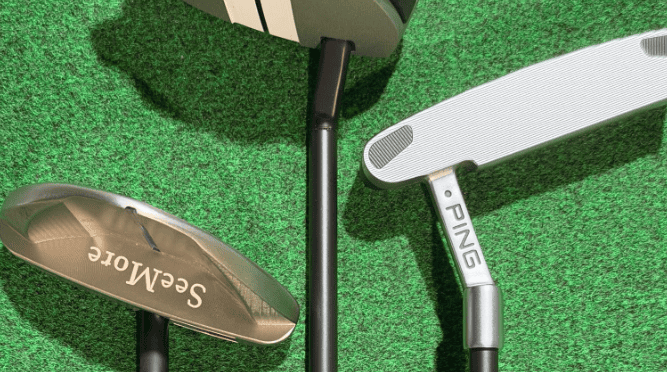
Don’t See Your Question Here? Get in Touch with the BGT Pros
Not sure if a blade putter or a mallet putter is best for you? Looking for more information on zero-torque putter shafts before you make any decisions about upgrading your equipment?
Get in touch with our professionals, let us know what you are looking for and we will make personalized recommendations to help ensure you are playing with clubs that are as well tailored to your abilities as possible.


