

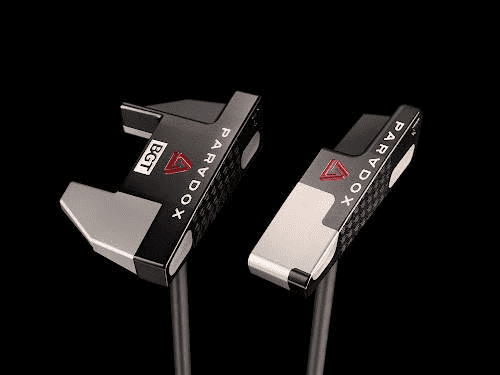
Most traditional putters are thin blade putters with a bit of toe hang that favor golfers that have a slight arc to their stroke, but as more and more professionals choose mallet putters, with their wider, broader heads, greater mass and stability, face-balanced design, and profusion of visual aids, intrigue around them grows.
This being the case, here are a few important things you should understand about mallet putters, how they are designed, and what they are intended to deliver.
Most traditional blade putters have toe hang, which means that if you balance the putter by the shaft, the toe will hang downwards, towards the ground. The reason for this weighting configuration is that many golfers have a slight arc to their stroke; this arc, which incurs rotation of the club face, necessitates a design that closes naturally at the point of impact.
This is precisely what blade putters with toe hang are designed to do. The weighting, slightly concentrated in the toe, encourages the putter face to close right at the point of impact, delivering a more consistent, accurate putt, specifically for players with a more natural arc to their stroke.
Mallet putters are commonly face balanced, which means that they exhibit neither toe nor heel hang. In other words, if you balanced the putter by the shaft, the face would point directly upwards towards the sky.
A face balanced putter will neither open nor close through a putt stroke, but is designed to stay square through a straight stroke. As a result, face balanced putters tend to deliver optimal results for golfers who have straight front to back strokes.
Now, we need to drill down into the performance of a face-balanced mallet putter here because there is a specific reason that they are often not the go-to choice for golfers with an arcing putt stroke, despite the fact that they are growing in popularity.
If you know that your putt stroke has an arc to it, a face balanced putter may potentially work against you. The toe hang of a traditional blade putter will accommodate your stroke and the extra mass in the toe will encourage the putter to close at contact with the ball, delivering more consistent and accurate putts.
A face balanced putter will potentially work against you, especially the more arc there is to your putting stroke. It may contact the ball with an open face, which can cause the putt to push off to the right, resulting in less accurate putts and inconsistent performance on the green.
Golfers may then begin altering their natural stroke to compensate for the putter, often creating even more inconsistency.
As a result, while there is a lot of hype surrounding face-balanced mallet putters right now, it is important to remember that despite their many virtues they are not always the best option for all golfers.
Another great thing about mallet putters is that they are often touted as offering greater stability and forgiveness, especially on mishits, and by and large this is true.
Because a face-balanced putter works naturally to keep the club face square with the original target line, it resists twisting, which generally will make it more accommodating of mishits. While no putter can correct a poor stroke, mallet putters tend to offer more forgiveness on off-center contact.
Face-balanced putters with their higher mass also tend to offer higher MOI, or “moment of inertia”, which refers to the club head’s ability to resist twisting. Together, a high MOI paired with a face-balanced design results in exceptional stability and can encourage putts to travel straight, even when contact is made slightly closer to the toe or heel than to the center of the putter face.
Your natural putting stroke should still be considered, but face-balanced mallet putters generally offer more forgiveness on off-center contact.
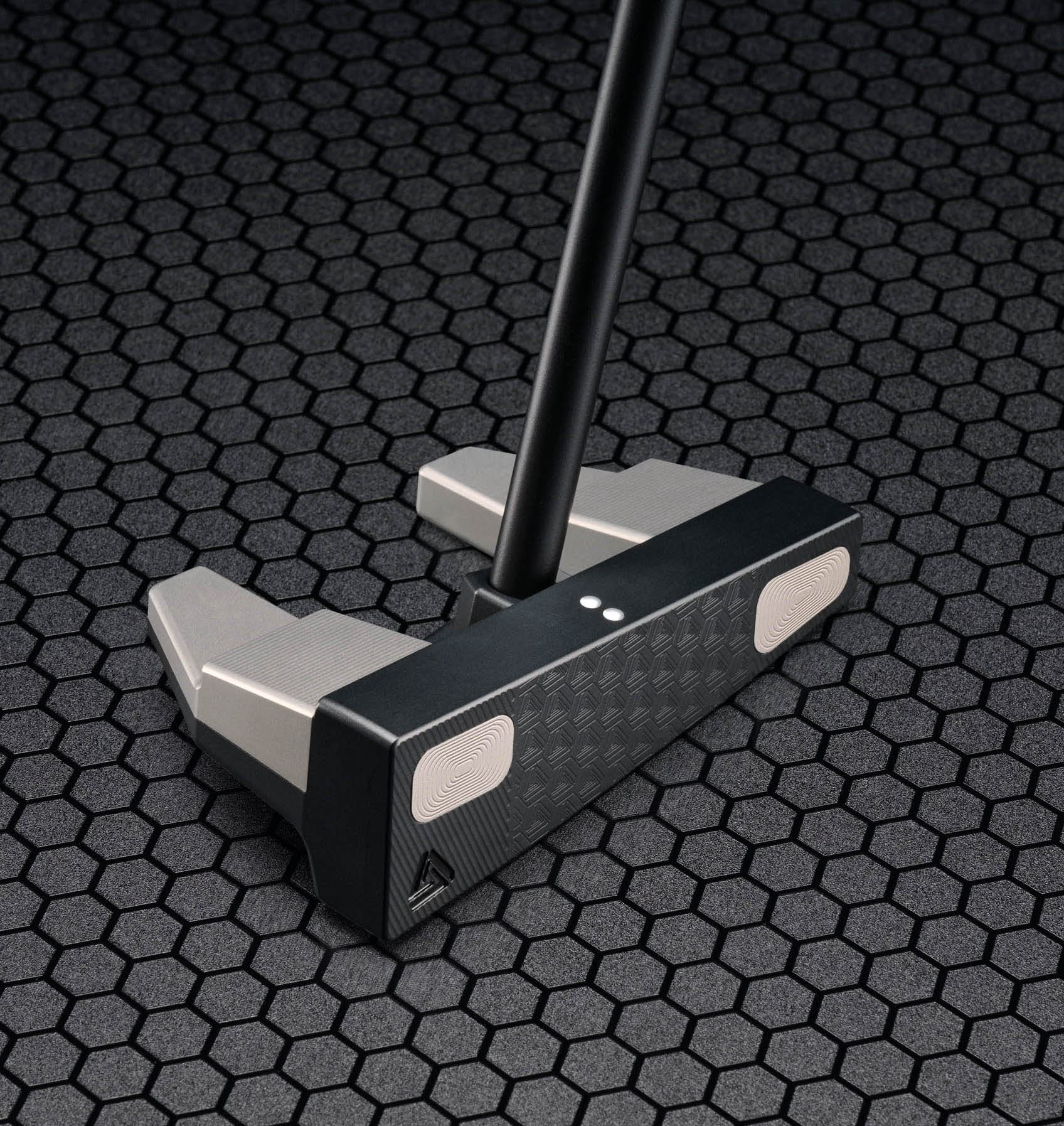
One other thing that mallet putters tend to offer is a greater number of visual alignment aids, which consist of a series of lines, dots, high-contrasting color shapes, or other visual cues, marked into the top surface of the putter, which help the golfer visualize the alignment of the putter head and face, and the intended path of the ball.
Now, there are some golfers that find these alignment aids distracting and cluttering, but there are many other golfers that insist that they improve their ability to visualize the path of the putt. You may very well find that you prefer them, but to find out, you’ll have to practice at some point or other with a putter that offers them.
Whether or not a traditional blade putter with slight toe hang or a face-balanced mallet putter that’s rich in visual alignment aids is for you is a matter of personal preference. We just hope you found this short exposition of mallet putters to be helpful.
If you have any questions about the features of the putters or putter shafts we offer, get in touch with us and we will be more than happy to help you get to the bottom of it.


